
Your LinkedIn post is only half the strategy
Picture two people at the same industry dinner. One of them stands up, gives a sharp toast but doesn't speak again for the rest of the night. The other says nothing from the podium, but spends the evening moving between tables, asking interesting questions, laughing at someone's story, remembering a detail from an earlier conversation. The second day, only one of the two gets a warm message and a coffee request, and it’s not the person who gave the toast.
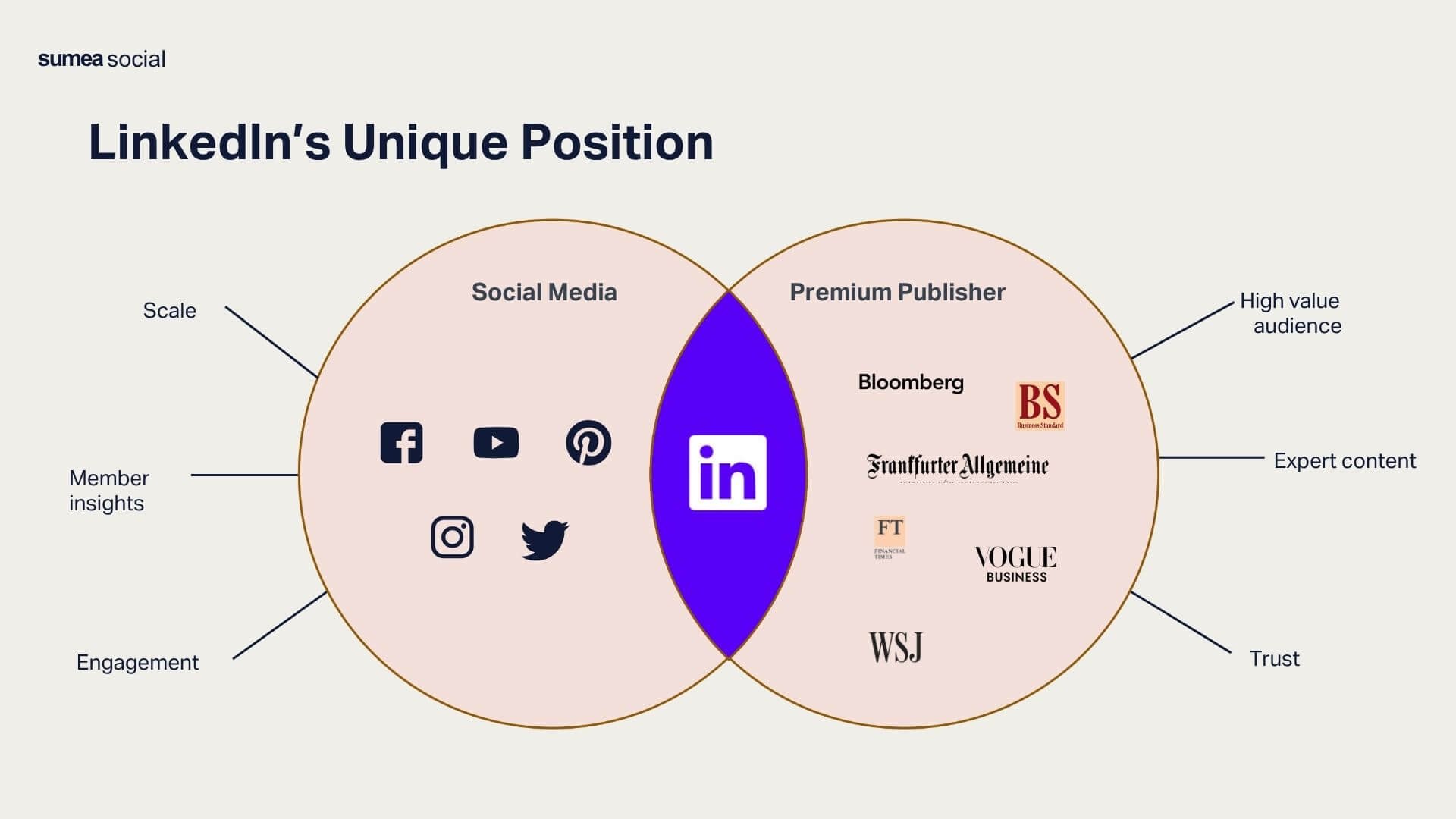
To make the most of LinkedIn, we need to understand how the platform sees itself. Internally, LinkedIn describes itself as half premium publisher and half social media platform. A 50:50 split. That gives us two equally important jobs: publish something worth reading and take part in the conversation. Most content advice stops at what to post and how often, leaving half the strategy as an afterthought.
Half the platform works like a magazine
The premium publisher half calls for considered, well-argued pieces from people with expertise and an opinion. Think of a magazine people read to learn something. The aim is to give them something worth their attention. Posting every day simply to fill the schedule misses that point.
But even a strong post fulfills only one half of that brief. The social half needs just as much attention.
The other half works like the dinner
Most content plans stop right there, at the post. But LinkedIn pays attention to people who stick around after they publish, not just the ones who write something and disappear. A comment with an actual point of view does more for a profile than most people think. Replying to every comment on your own post does the same, not just the first two or three.
LinkedIn notices accounts that act like they're actually on a social platform. That's what gets rewarded - being visibly around - not just having a backlog of posts.
Why most plans leave it out
Commenting well takes time most content calendars never plan for. Actually reading a post closely enough to say something specific, instead of "great point," takes more effort than just scheduling one. It doesn't fit neatly into a content grid, so most agencies leave it out of the brief altogether, even though it's doing half the actual work.
The 50:50 split should shape your strategy
LinkedIn describes its own platform this way internally: half social media, next to Facebook, Instagram, YouTube, and Twitter, and half premium publisher, next to Bloomberg, the Financial Times, the Wall Street Journal, and Vogue Business.
Both sides deserve equal weight in a LinkedIn strategy. Yet people spend hours planning posts and leave engaging for whenever they have a spare minute. Then they wonder why their content struggles to reach people. Publishing gives people something to read; commenting, replying and liking posts keep you involved in the community you want to reach. Engagement needs a place in the plan from the start.
What it looks like when someone does both
Someone posting with an opinion twice a month and commenting daily under their own name can be more visible than someone posting four times a week who never comments anywhere else. One of them is actually around. The other one shows up, drops something off, and vanishes until the next post.
Start here instead
Check your notifications daily.
Say something specific in a comment, a number, a disagreement, a detail from your own experience, instead of a one-line compliment.
Like posts from people whose work you actually follow.
Reply to every comment on your own posts, not just the first few.
By Romy Abdallah